
The Pots
watering and weeping, saying goodbye and hello

Angie’s garden was impossible, soggy airless clay, wet with the streams that run down Caldy Hill (in front of her house) and collect in the ditches along the Wirral Way (at back of her house) before heading down to the river.
You need to dig some drainage in, I said, when she moved in and things she planted began to drown, you need to dig in gravel, chippings. But she didn’t want the bother of all that and said she would just keep it as lawn and have some pots.
And so the pots were always important, they were the garden, and she was good at it. A few permanent residents - a clematis and some honeysuckle, hydrangeas and later, roses, a fatsia japonica and then, the summer visitors.
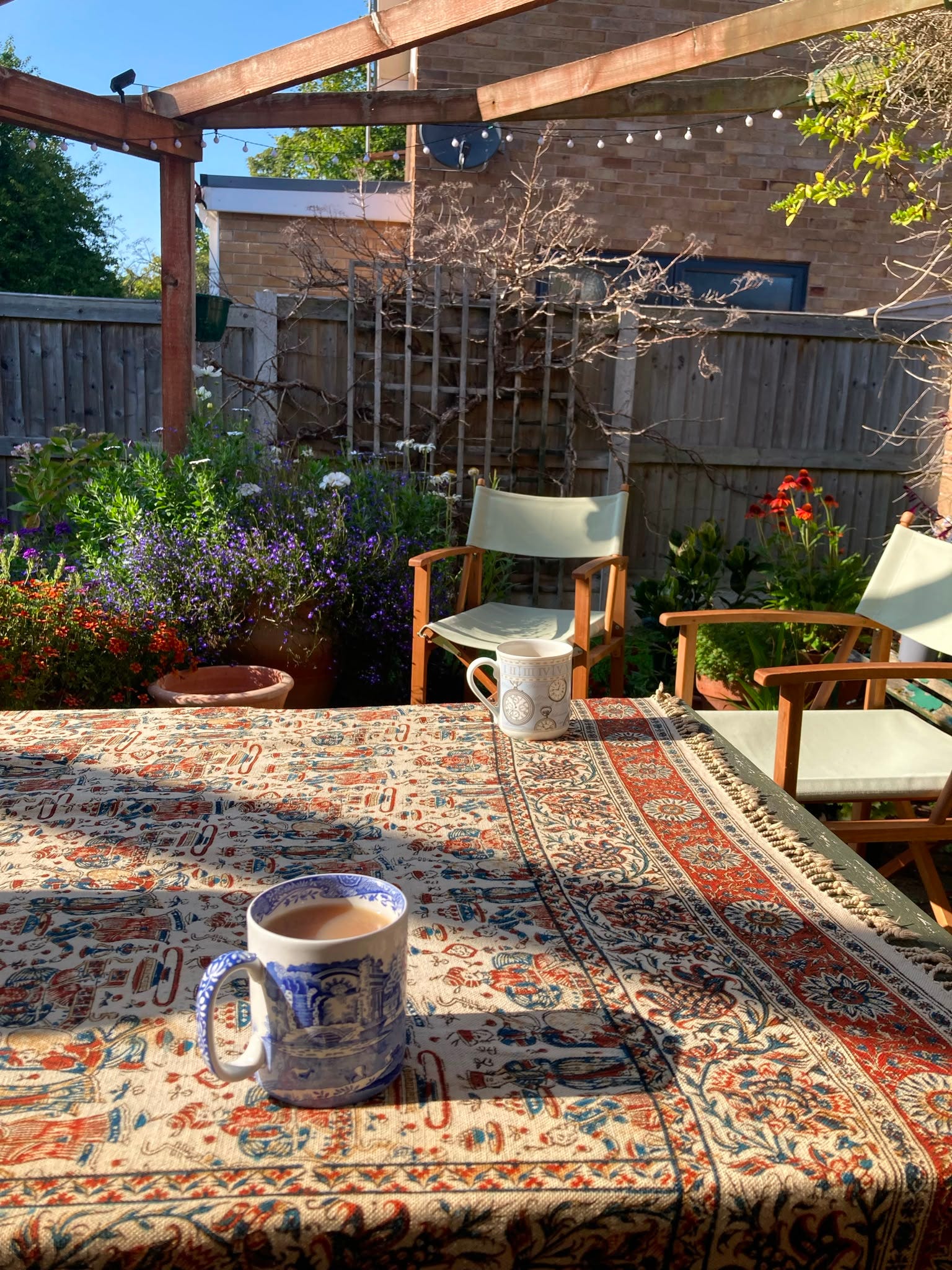
She would find particular favourites - the brown orange bidens returned year after year and purple scaevola, a bedding plant she discovered at Port Sunlight Garden Centre and loved. It has v-shaped flowers, flowers like little birds, arrowheads. There would always be blue lobelia, too and various open-faced, daisy-like flowers, osteospermum, and a fabulous tomato soup red echinacea.


I am taking the pots away, a car bootful at a time. Those I haven’t been able to take yet I’m watering. Inside the house, which I see through the kitchen window, the side patio door, she isn’t there. Everything looks as if she might be there - it is the same house, the same table, the same things on the windowsill.
Friends in the Paradise Lost Shared Reading group sent me this poem - new to me - by Emily Dickinson, which painfully touched the spot of her absence. But we must touch the spot, testing the extent and depth of the bruise.
The Bustle in a House
The Morning after Death
Is solemnest of industries
Enacted opon Earth –

The Sweeping up the Heart
And putting Love away
We shall not want to use again
Until Eternity –
I bustled pots of roses into the boot of the car. Some of them are suffering, the heat has been remorseless and in their pots they can’t really stand more than a day or two without watering. I’ve brought them here, to stand in buckets of water in the shade. These are the yellow roses she loved and had gone on an expedition into Cheshire to find at one of the last local rose nurseries.
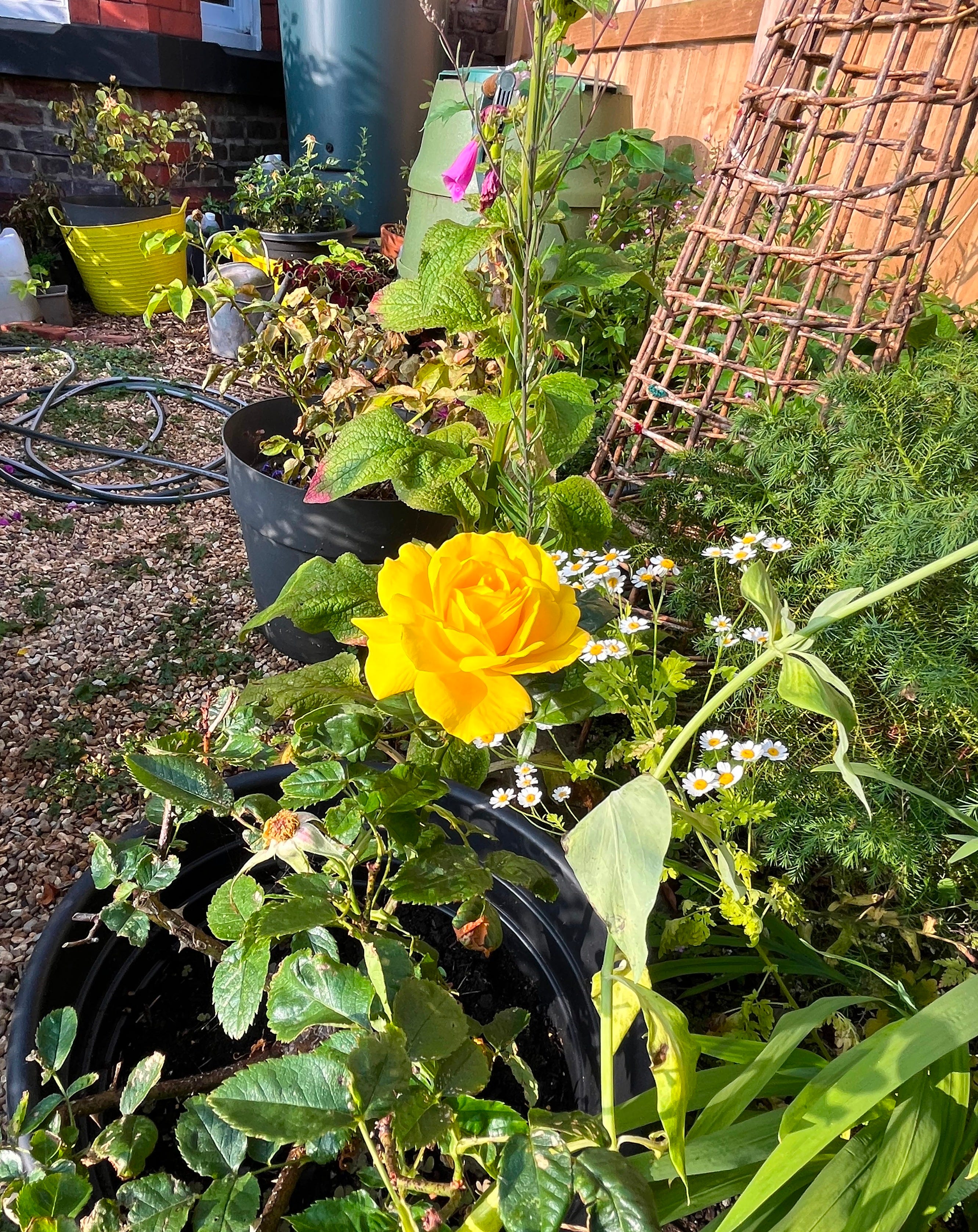
I thought it was just going to be ‘collecting the pots’ but of course it was more like mourning, what Emily Dickinson calls ‘the sweeping up the heart/putting love away’. Each pot was a pot she had loved and whatever was in that pot was something she had chosen, had been in relation to. I felt both close to and distant from the living hand that had planted the scaevola, had planted a great display of bidens.
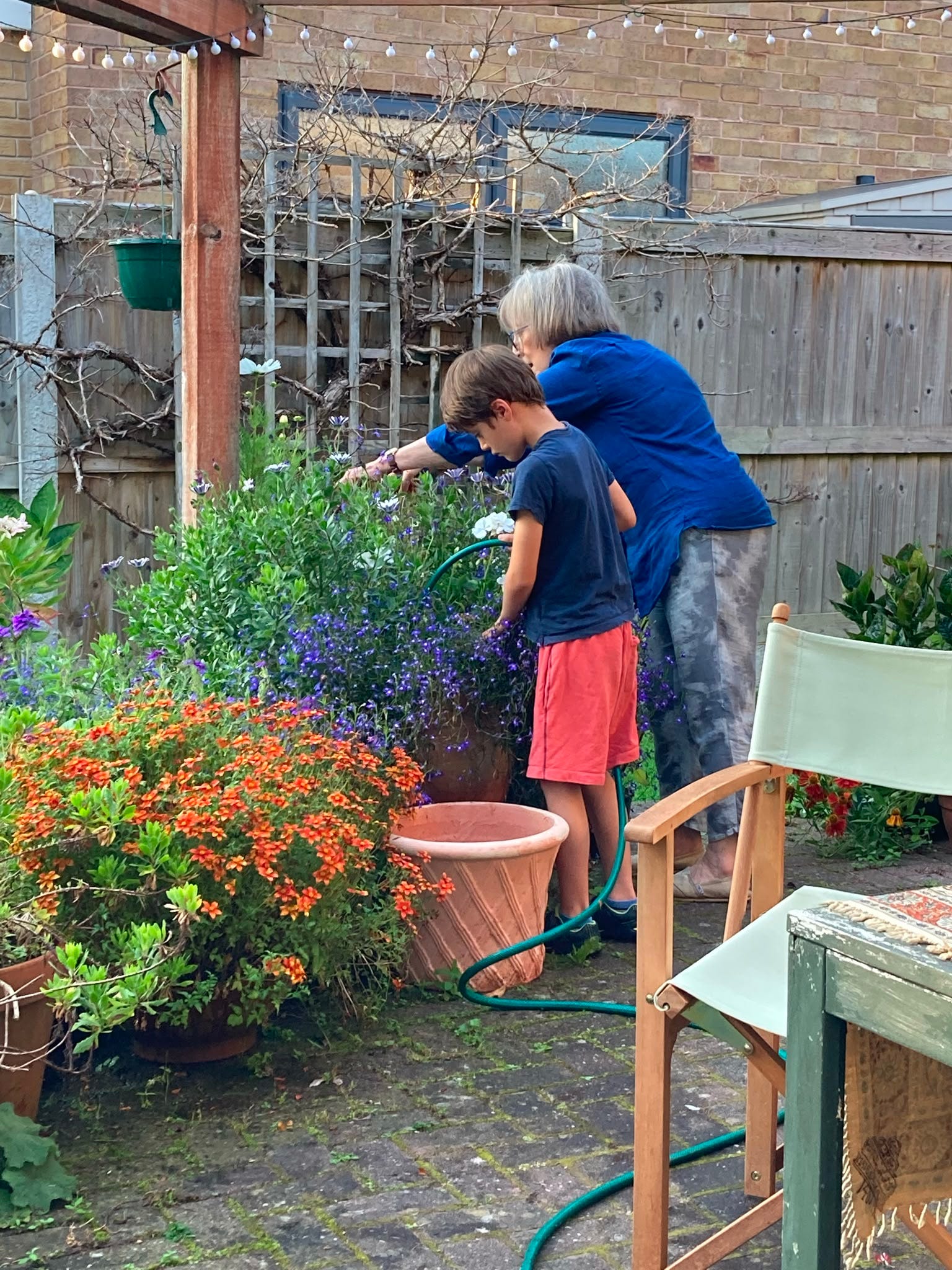
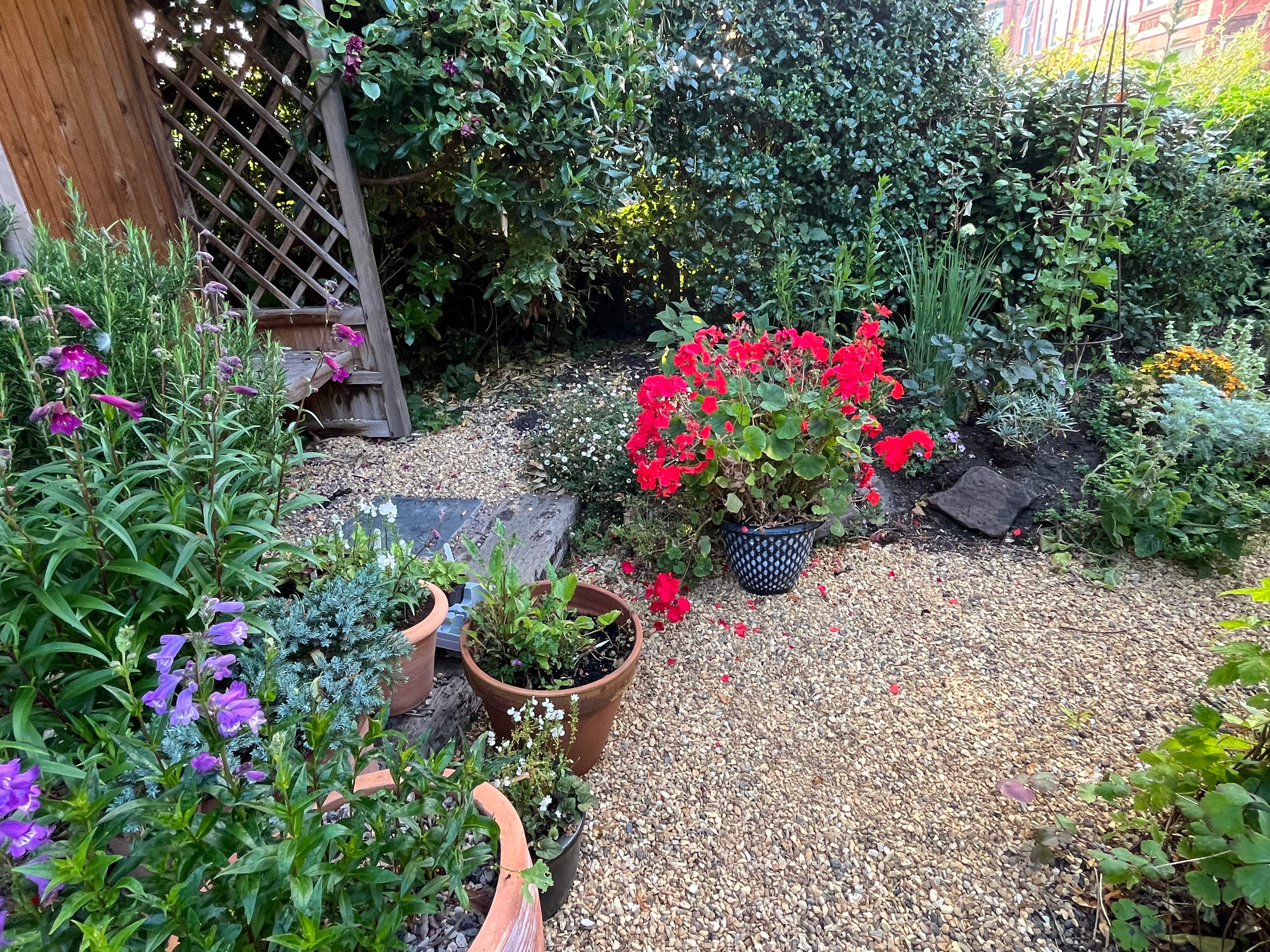
The pots are staying with me for a while until Angie’s daughters take any they want, and then I’ll take the rest to Calderstones.
***
And at Calderstones life this week has all been about watering. Watering our pots and anything newly planted - trees, shrubs and even the new annuals bed. But nothing else - the borders and lawn must take their chances. And yet because Calderstones earth holds onto moisture our David Austen Roses are looking magnificent.
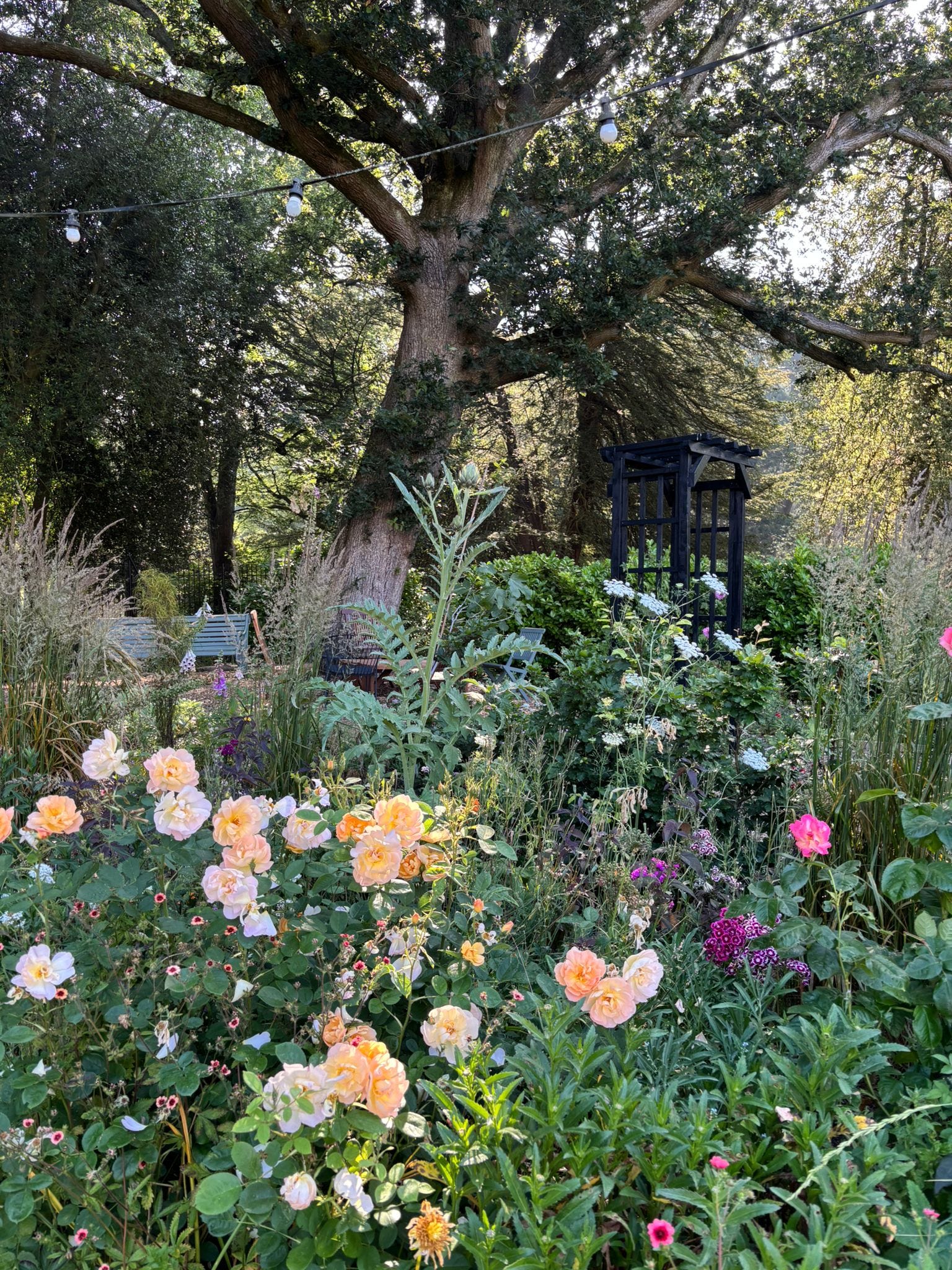
We said a fond farewell to Jigdee (Jigdbayar) who has been with us (from Mongolia) since April. And we welcomed a new volunteer, Miranda, whose (Chinese) family live very close to Jigdee’s part of Mongolia!


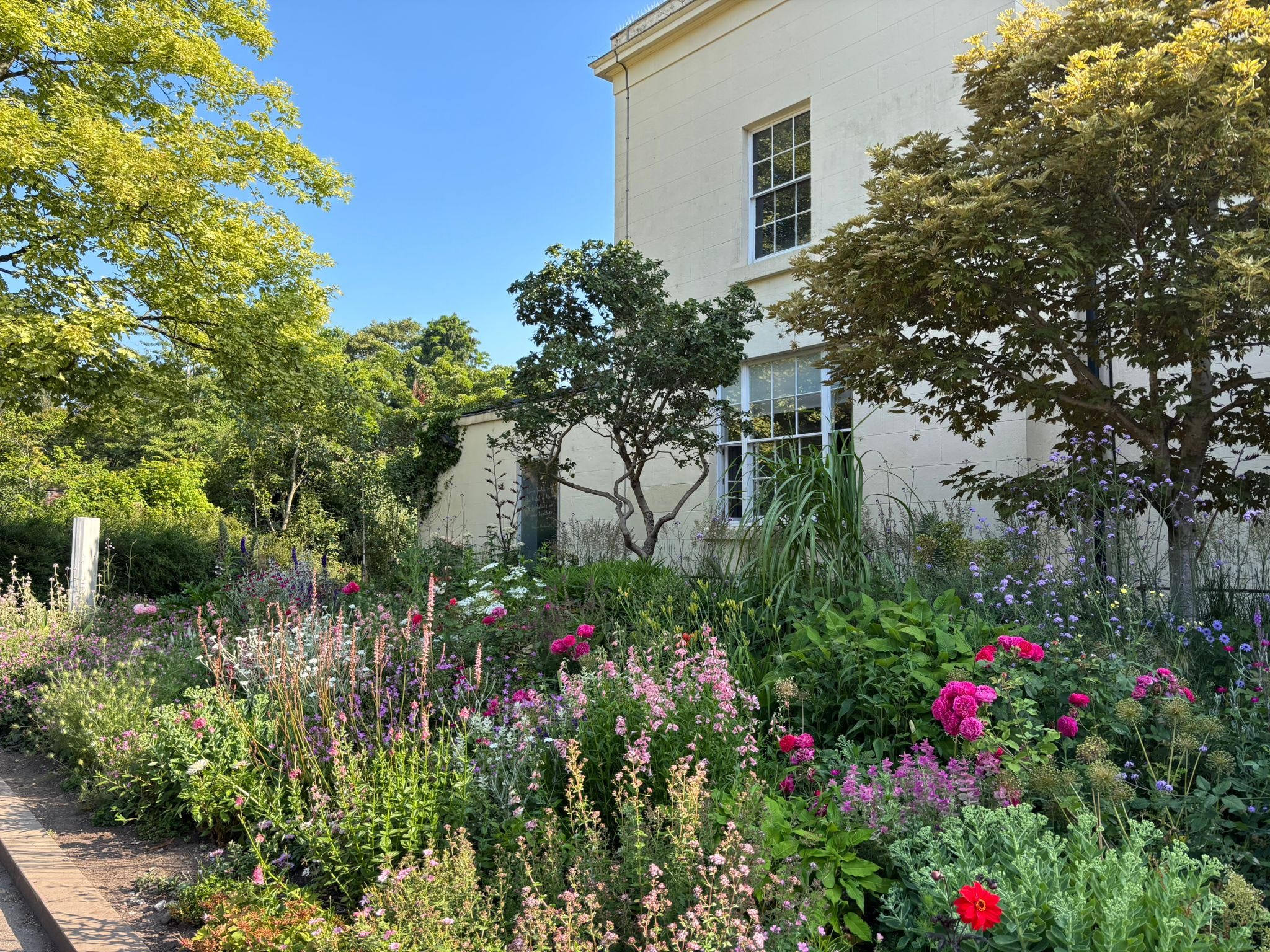
Front Border is in its height of June glory (but don’t look too closely, lots of weeds) and the David Austin roses here (Gabriel Oak) are beginning to provide the thing we need to work on - the repetitions, the rhythm.
Get in the shade, readers!
I hadn't thought about that before: the poignancy of dismantling a garden when someone dies. What a beautiful lasting memory to have your friend's plants live on in other gardens.
The best thing Ive read on this platform! Anyone who has lost a close garden friend or revered garden mentor will read this more than once - it awakens a place deep within.